I saw a post on LinkedIn last week that made me put my coffee down. An "SEO expert" with thousands of followers was telling business owners to create "Top 10 [Service] in [City]" pages and rank themselves at number one. The idea? If you build a list and put yourself on it, Google and AI systems will cite you as the best.
His followers were lapping it up. "Great tip!" "Doing this today!" "Why didn't I think of this?"
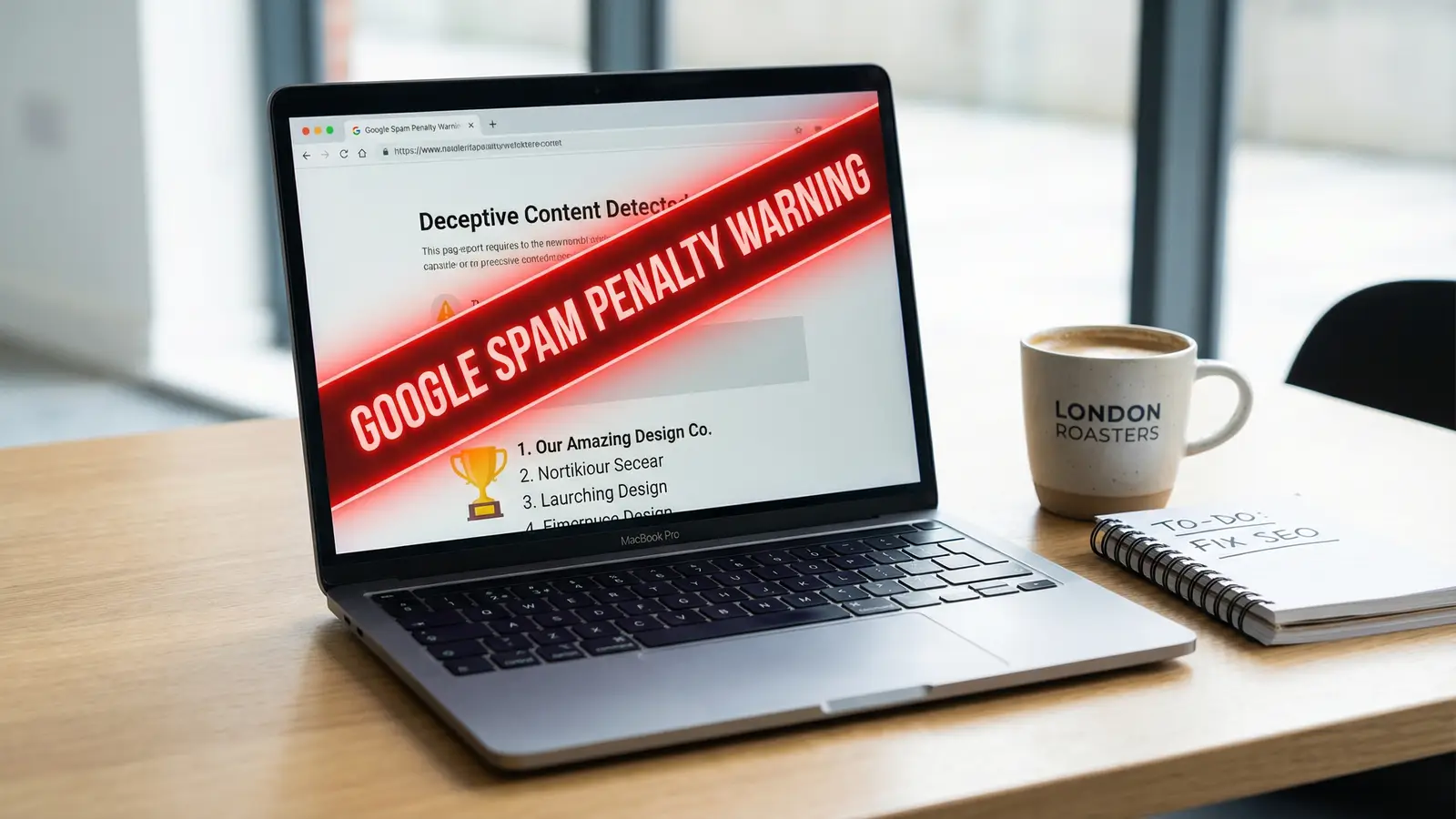
Here's why you didn't think of it: because it's a trap. Google has been actively cracking down on exactly this kind of content since March 2024. And the consequences aren't a slap on the wrist. They're a penalty that can tank your entire domain.
Google Has Three Names for This. None of Them Are Good.
In March 2024, Google rolled out its biggest spam policy overhaul in years. It introduced three new categories of abuse, and self-referencing listicles can trigger all three.
Scaled content abuse covers pages created in bulk to manipulate rankings. Spinning out "Top 10 Web Designers in Birmingham," "Top 10 Web Designers in Manchester," "Top 10 Web Designers in Leeds" with yourself at number one each time? That's scaled content abuse, whether you wrote it yourself or got AI to do it.
Site reputation abuse targets content that exploits a domain's existing authority to rank content it shouldn't. Publishing a "Top 10" listicle on your business site, where you have an obvious conflict of interest, fits the pattern Google is looking for.
Doorway abuse catches pages created to rank for specific search queries that funnel users to a single destination. Creating ten city-specific listicle pages that all lead to your contact form? That's a doorway.
Elizabeth Tucker, Director of Product at Google, said the goal was to cut low-quality content from search results by 40%:
"The combination of this update and our previous efforts will collectively reduce low-quality, unoriginal content in search results by 40%."
Elizabeth Tucker, Google, Google Blog, March 2024
That 40% figure should concern anyone whose SEO strategy depends on content created primarily for rankings rather than for readers. When the rollout finished in April 2024, Google said they'd actually hit 45%.
I remember reading that announcement and thinking: this is long overdue. After thirty years building software and websites, I've watched every shortcut get patched eventually. The "Top 10" listicle is just the latest one to get caught.
Why Bad SEO Advice Spreads on LinkedIn
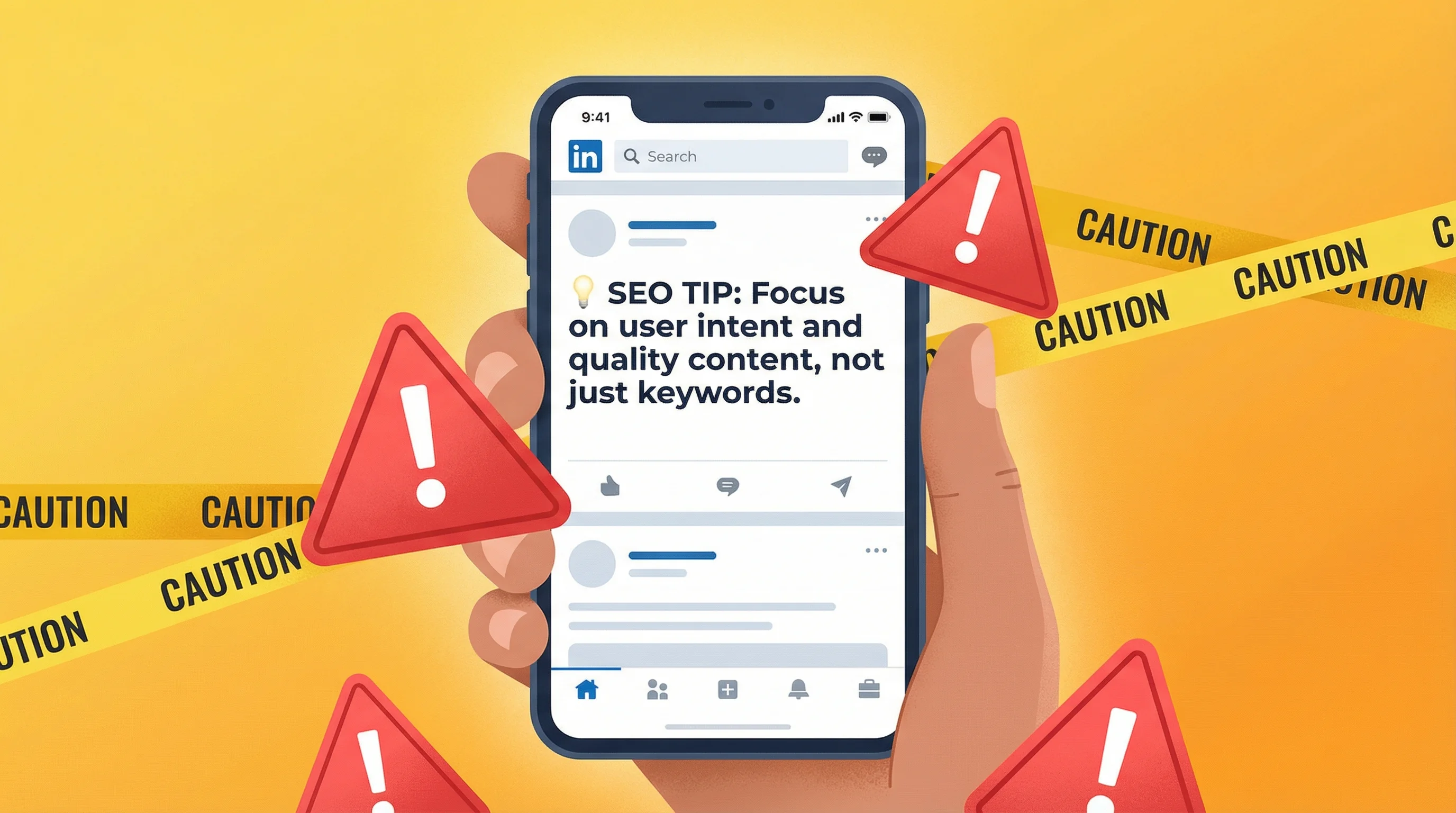
The listicle trick sounds smart on the surface. If AI systems read text, and you write text that says you're the best, the AI will repeat it. Simple.
It's also wrong. Modern LLMs don't just read your page in isolation. Google's Gemini cross-references claims against other sources. If you say you're the number one web designer in Kettering but no reviews, directories, or third-party sites back that up, the model treats it as marketing fluff. Or worse, as a signal that your domain produces unreliable content.
The post I saw on LinkedIn had hundreds of reactions. And that's the problem with SEO advice on social media. Engagement rewards confidence, not accuracy. A bold claim like "create Top 10 pages to hack LLM visibility" gets likes because it sounds like a hack. The people who tried it and got penalised six months later don't post about that.
The Damage Isn't Just to One Page
This is the part most people miss. A Google spam penalty doesn't just demote the offending page. It affects your domain's trust score across the board.
Lily Ray, Senior Director of SEO at Amsive, put it bluntly when discussing site reputation abuse:
"You basically get a penalty and you cannot come back from that unless you noindex the content."
Lily Ray, Amsive, SEO Week 2025
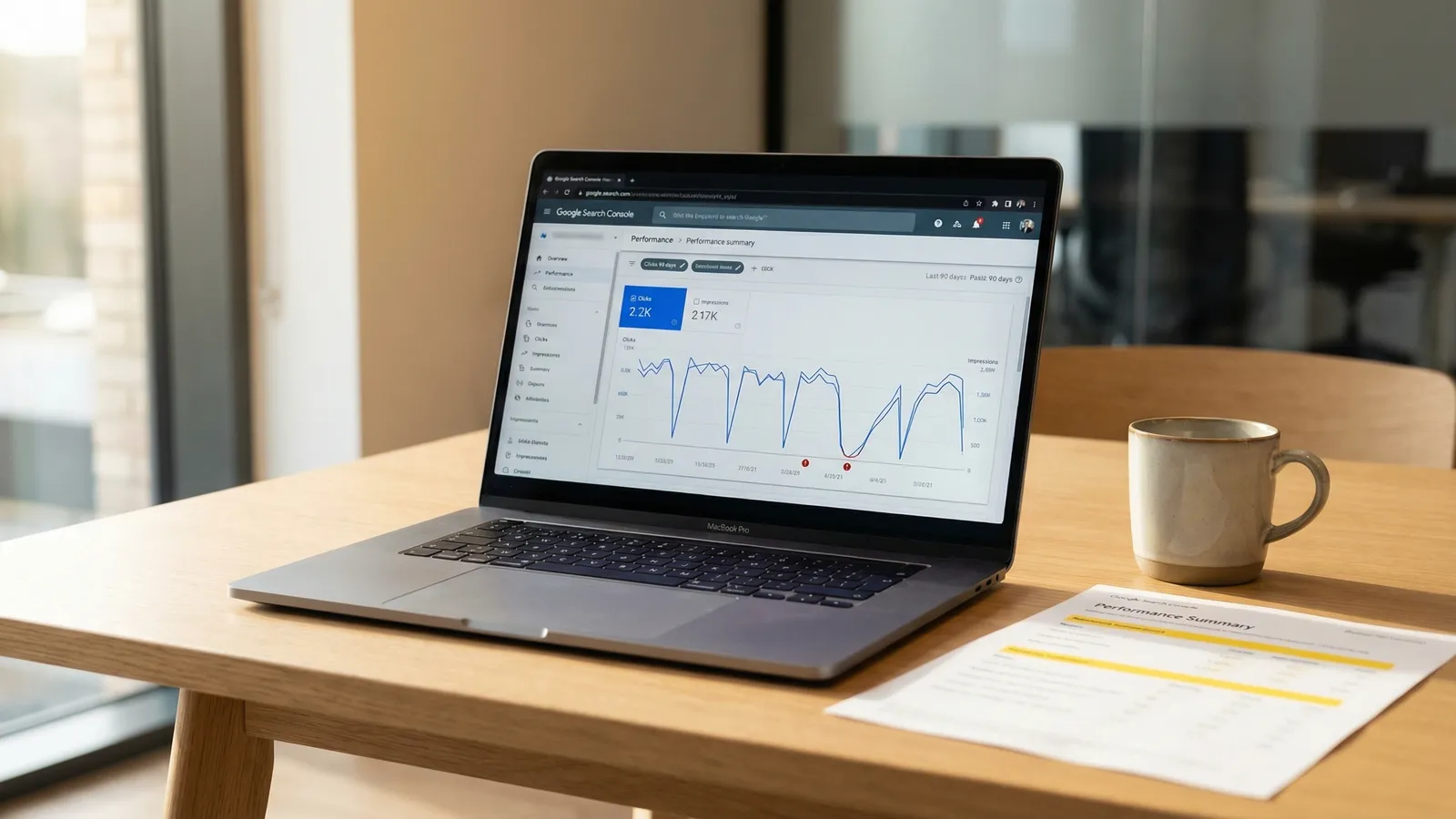
"Cannot come back" isn't hyperbole. Once your domain gets flagged for spam practices, every page on your site pays the price. Service pages, blog posts, homepage, the lot. That listicle took an afternoon to write. The recovery? Months of cleanup work, disavow files, reconsideration requests, and for some businesses it never fully comes back.
Reading Lily's analysis was a turning point for me. I'd already been advising clients against shortcuts, but her research showed just how severe the consequences had become. It's not a ranking drop. It's a trust collapse.
And there's a cost angle too. If organic visibility drops, the only way to maintain lead flow is paid search. Customer acquisition costs can double or triple overnight. For a UK small business spending £500 a month on SEO, suddenly needing £1,500 a month on PPC to stay visible is the kind of hit that closes businesses.
What Actually Works in 2026
So if you can't rank yourself on a fake list, how do you build visibility? By earning it.
Get listed on real directories. Clutch, Trustpilot, Google Business Profile, Bark, Checkatrade (for trades). These are the sources Google and AI systems trust. A five-star rating on Trustpilot backed by 50 genuine reviews carries more weight than any self-authored listicle.
Build AI discovery files. These tell AI systems who you are, what you do, and how to represent your business. We've written about how AI discovery files help businesses get recommended, and the results speak for themselves.
The PR route is more work, but it's bulletproof. Pitch your business to local publications, industry bloggers, trade directories. A mention in the Manchester Evening News or a trade magazine is worth a hundred self-authored lists. Digital PR typically costs £1,500-3,000 per month from a freelancer, but the links are safe, authoritative, and penalty-proof.
Create comparison content that's genuinely useful. Instead of "Top 10 Web Designers in Your City," write "WordPress vs Squarespace for UK Small Businesses" or "What to Look for When Hiring a Web Designer." Content that helps people make decisions builds the kind of E-E-A-T signals Google rewards.
Invest in proper SEO. Not tricks. Structured data, fast-loading pages, original content with genuine expertise. GEO (Generative Engine Optimisation) is the new frontier, and it rewards exactly the kind of authentic content that self-referencing listicles undermine.
The Bottom Line
If someone on LinkedIn tells you to create a "Top 10" page and put yourself at number one, they're giving you a recipe for a Google penalty. It doesn't matter how many likes the post got. It doesn't matter how logical it sounds. Google has spent the last two years building systems specifically designed to catch this tactic, and AI systems are getting smarter about filtering self-promotion too.
The businesses that win in 2026 are the ones that earn their visibility: through genuine reviews, authoritative backlinks, useful content, and proper technical SEO. It takes longer. It costs more. And it's the only approach that won't blow up in your face when Google rolls out its next update.
Frequently Asked Questions
What is a self-referencing listicle?
A self-referencing listicle is a "Top 10" or "Best of" list published by a business that ranks itself at number one (or near the top). For example, a web design agency publishing "Top 10 Web Designers in London" and placing themselves first. Google treats these as biased, low-quality content.
Will Google penalise my Top 10 page?
If the page exists primarily to rank your business for a search query, and you've listed yourself at or near the top without objective methodology, yes. Google's March 2024 spam policies specifically target scaled content abuse, doorway pages, and site reputation abuse. Self-referencing listicles can trigger all three.
Is there a legitimate way to create a "best of" list?
Yes, if you're an independent publication with an editorial process and clear methodology. A newspaper ranking restaurants based on visits and reviews is legitimate. A restaurant ranking itself above its competitors is not. The test: would a reader trust the ranking if they knew who published it?
Do self-referencing listicles help with AI/LLM visibility?
No. Modern AI systems like Google Gemini and ChatGPT cross-reference claims against reviews, directories, and third-party sources. Uncorroborated self-rankings get filtered out or deprioritised. AI discovery files and genuine third-party citations are far more effective.
I already have a Top 10 page. Should I remove it?
If it ranks your own business at the top without objective criteria, remove it or noindex it. Leaving it live risks a manual action from Google that affects your entire domain. Better to lose one page than tank your whole site's visibility.
How do I build search visibility without listicle tricks?
Collect genuine reviews on Trustpilot and Google Business Profile. Get listed in real directories like Clutch or Bark. Publish useful comparison content and how-to guides. Implement AI discovery files. Invest in digital PR. These strategies build trust signals that survive every algorithm update.
How much does proper SEO cost compared to these shortcuts?
A listicle page costs nothing to create but risks penalties that can cost thousands in lost revenue and recovery fees. Proper SEO starts from around £500/month for a small business. Digital PR for authoritative backlinks runs £1,500-3,000/month. The ROI is better because the results compound over time instead of collapsing when Google catches up.
Want Search Visibility That Lasts?
Shortcuts get penalised. Genuine expertise gets rewarded. 365i Web Design builds websites and SEO strategies that earn visibility through quality, not tricks.
Check your current AI visibility with our free AI Visibility Checker, or get in touch to discuss your SEO strategy.